
led beauty mirror
In-depth Analysis of Granite Box , block of granite , marble stone box , square marble box , large marble box | Data-driven Insights, Process Flow, EEAT Standards Fulfilled 1. Granite Box & Related Products: Industry Insights and Current Trends The Granite Box is a precision-engineered product offering unrivaled durability, stability, and precision in industrial environments. Alongside alternatives such as block of granite , marble stone box , square marble box , and large marble box , these products are critical components in metrology, tooling, and industrial measurement sectors. Industry Trend (2024): Data from the International Federation of Robotics indicates that over 35% of high-precision machinery installs in 2023 specified granite-based metrology or assembly supports , signaling rising market adoption. Material Focus: Demand for granite box and marble stone box has grown steadily due to their intrinsic rigidity, low thermal expansion ( Granite's coefficient: ~4.8x10 -6 /°C vs. steel: ~12.0x10 -6 /°C), and superior corrosion resistance. Granite & Marble Box Market Overview (2021-2024, Estimated) Year Granite Box Demand (Units, thousands) Marble Box Demand (Units, thousands) Average Price (USD) Application Growth Rate (%) 2021 48 17 $388 8.5% 2022 56 21 $399 11.2% 2023 66 27 $427 15.8% 2024(E) 78 33 $440 17.5% Noteworthy: This surge aligns with increased ISO/ANSI calibration requirements and tightening QA protocols in aerospace, petrochemical, and metallurgical facilities. 2. Material, Engineering, and Performance Specifications Overview Main Technical Parameters of Granite Box (Typical) Parameter Granite Box Block of Granite Marble Stone Box Material Black Granite (ISO 8512-2) Natural Granite Processed Marble Compressive Strength 220-250 MPa 195-215 MPa 120-155 MPa Tensile Strength 7.8-9.2 MPa 6.5-8.0 MPa 8.5-11.0 MPa Flatness Tolerance ≤ 8 μm/m ≤ 18 μm/m ≤ 20 μm/m Surface Hardness HS 70-90 HS 65-83 HS 57-74 Thermal Expansion 4.80×10 -6 /°C 5.20×10 -6 /°C 8.20×10 -6 /°C Density 3,070 kg/m³ 2,950 kg/m³ 2,680 kg/m³ Corrosion Resistance Excellent Excellent Good Typical Sizes 100×100×100 mm up to 1500×1000×400 mm Custom 120×120×180 mm up to 1200×600×400 mm 3. Granite Box Manufacturing Process: Visualized Workflow Manufacturing a granite box requires advanced material selection, precision engineering, and rigorous quality checks. The following diagram outlines a typical end-to-end production process : Step 1: Raw Material Sourcing → Hand-selected, high-density black granite blocks (as per ISO 8512-2 ) are acquired for crack-free, homogeneous composition. Step 2: Rough Cutting & Shaping → Diamond wire saws and multi-axis CNC machining shape the block close to the desired geometry. Step 3: Precision Machining → CNC surface grinding achieves flatness & parallelism ( <8μm/m ), while all holes/inserts are milled and threaded to ANSI B5.9 tolerance. Step 4: Lapping & Polishing → Semi-automated lapping reaches mirror-like surface, ensuring hardness & scratch-resistance for dimensional calibration. Step 5: Ultrasonic Cleaning & Sealing → Final product is cleansed, sealed with anti-corrosive coatings, and metal inserts are securely bonded or pinned. Step 6: ISO-Compliant Inspection → Each granite box undergoes full dimension, hardness, and flatness validation against ISO 8512 / ANSI B89 standards. Step 7: Packaging & Traceability Labeling → Precision crating, serialization, and export-compliant documentation ensure traceability and safe transport. Watch short process overview video: How Granite Metrology Blocks Are Crafted Key Manufacturing Technologies: Precision lapping, CNC 5-axis machining, diamond wire cutting, ultrasonic flaw detection Quality Certifications: Each granite box is supplied with an ISO 9001 and ISO 8512 calibration certificate. 4. Manufacturer Comparison: Granite Box vs. Block of Granite, Marble Stone Box Product/Factory Comparison Table Feature Granite Box [STR Machinery] Block of Granite [Generic] Marble Stone Box [Domestic] Material Source Premium Africa/India Black Granite Regional Quarries Domestic Marble Block Manufacturing Process Full CNC + Lapping + ISO Test Semi-manual Saw & Plane Manual Cutting/Polishing Flatness Precision ≤ 8 μm/m ≤ 20 μm/m ≤ 22 μm/m Size Capacity From 100 mm up to 2000 mm 100 mm - 1500 mm 200 mm - 1200 mm Corrosion Protection Anti-Ox Layer + Epoxy None/Simple Wax Polish Only ISO Certification ISO 8512, ISO 9001 No No Warranty 3 Years / 5 Years (Optional) None/1 Year 1 Year Custom Capability Complex CNC Pockets, Inserts None Simple Holes Major Industries Served Petrochemical, Metallurgy, Waterworks, Aerospace Construction, General Decoration, Building Sample Lead Time 7 Days 18 Days 15 Days 5. Custom Solutions: Design, Application, and Support STR Machinery offers tailored granite box and square marble box solutions to fit demanding industrial, scientific, and calibration environments: Custom Size & Features: Up to 2,500 mm length, up to 500 mm thickness, custom slots/holes/pockets, various inserts (SS, brass) for fixture mounting. Application Engineering: Extensive collaboration with R&D labs, QA facilities, fluid processing, and OEMs worldwide. Lead Time: Standard granite box : 10-14 working days ; Custom complex: 18-24 days (ex-factory, excl. shipping). Documentation: ISO-certified inspection report, CAD drawing, maintenance guide, and calibration certificate included. After-sales: 3-year comprehensive warranty, 1-year on-site recalibration (Europe, SE Asia, NA, ME), and lifetime technical counseling. Notable Clients: SGS, Shell, Thyssenkrupp, Enbridge Inc., Qatar Petrochemical. 6. Case Study: Granite Box in Precision Waterworks Measurement Scenario: In 2023, a leading municipal water utility (EastAsia Water Inc.) commissioned STR Machinery to supply a 1,200×700×200 mm granite box for gravimetric flow calibration. Specification: Flatness ≤8 μm, corrosion protection epoxy, six SS inserts for flexible instrumentation. Implementation: Delivered and installed within 16 days, certified to ISO 9001 process traceability, supported by on-site training for measurement crew. Performance Data: Reduced downtime by 29%, improved volumetric measurement repeatability from ±13 μm to ±6 μm (mean) — supporting audit and engineering records for metrology compliance. Client Feedback: “STR’s granite box solution notably enhanced both workflow and accuracy in our ISO/IEC 17025 lab validation.” — Chief Metrologist, EastAsia Water Inc. FAQ: Professional Technical Questions & Answers 1. What is the standard material used for a Granite Box ? The primary material is black granite of grade 00 or 0 (per ISO 8512-2), offering ultra-low thermal expansion and high compressive strength. Select marble stone boxes use dense Italian or Indian marble for cost-sensitive applications. 2. What are the typical size and flatness tolerances for a granite box ? Standard dimensions range from 100×100×100 mm to 2000×1200×400 mm. Flatness tolerance (per ISO 8512/ANSI B89): ≤8 μm/m for high-precision applications. 3. How does CNC machining improve precision in granite box production? CNC ensures consistent surface flatness, parallelism, and geometric accuracy . Automated tool paths minimize operator error and comply with stringent international standards. 4. Which certifications are supplied with each granite box ? Every granite box is provided with ISO 9001 factory QA certificate, ISO 8512 (for flatness/size), and an individual calibration report traceable to NIST or local metrology bureaus. 5. What is the recommended maintenance cycle for a granite box ? Clean the surface with lint-free cloth, avoid abrasive detergents, and recalibrate every 18–36 months depending on industrial load (per ASTM E2877). 6. What is the standard installation protocol? Place on vibration-isolated leveling bases, verify flatness using a certified electronic level/laser, and secure metal inserts as needed (see manufacturer's mounting instructions). 7. How long is the product warranty and what support is available? STR Machinery provides a 3-year full structural warranty and lifetime tech support, including on-site calibration for certified industrial/lab users. 7. Delivery, Warranty & Client Support Delivery Cycle: Stock items: 3–5 business days; Custom/CNC: 10–18 business days (ex-factory). Packaging: Shockproof wooden crates, dust/vapor barrier, real-time tracking with QR code traceability. Warranty: Full 3 years warranty , extendable to 5 years; covers material, flatness, and process defects. After-sales Service: On-site recalibration (Europe/NA/Asia), online diagnostics, application consulting by senior metrology engineers (ISO/FDA projects supported). Customer Support Hotline: service@strmachinery.com (24/7 dedicated response). Document Portal: Technical drawings, calibration certificates, and maintenance SOPs digitally provided for every shipped granite box . 8. References & Further Reading International Federation of Robotics. 2024 Market Study on Precision Granite Supports: https://ifr.org/downloads ASM International, “Granite and Marble Supports for Metrology: Comparative Material Review”, asminternational.org , 2023. ISO 8512-2:2020 — Measurement Standards of Granite Surface Plates, https://www.iso.org/standard/71309.html “Flatness Calibration and Maintenance of Granite Measuring Equipment”, Swiss Precision Forum , 2024. National Metrology Institute (NPL), UK “Use of Granite in Industrial QA”, npl.co.uk “Granite's place in industrial metrology remains secure, underpinned by international standards and the ongoing need for dimensional accuracy in automation and advanced manufacturing.” — Swiss Precision Community Forum, 2024
about
led beauty mirror
The Knife Edge Ruler Precision in Measurement In the world of measurement and engineering, the concept of precision is paramount. Among the tools that embody this vital principle is the knife edge ruler. This unique measuring device stands out for its design and functionality, making it an essential instrument for professionals in various fields, including woodworking, metalworking, and even architecture. A knife edge ruler is characterized by its finely sharpened edge, which allows for an extremely accurate reading of measurements. Unlike traditional rulers, which may have a blunt edge that can create discrepancies in measurement accuracy, the knife edge design provides a pinpoint reference for measurements, ensuring that every millimeter, inch, or centimeter is accounted for with the utmost precision. This feature is especially important in applications where slight deviations in measurement can lead to significant errors in the final product. The origins of the knife edge ruler can be traced back to traditional craftsmanship where artisans needed tools that could deliver high accuracy for their intricate work. Its design is rooted in the need for simplicity, efficiency, and effectiveness. A well-made knife edge ruler typically features a straight, elongated body with gradations etched along its length. The sharp edge, often made from high-quality steel, serves not only as a reference point but also as a means to score materials like wood or metal, facilitating cleaner cuts and joints. The applications of the knife edge ruler extend beyond the workshop. In the field of engineering, precision is critical, and tools that can deliver this level of accuracy are invaluable . Engineers often employ knife edge rulers in drafting and design, where accurate measurements can influence the integrity and aesthetics of a structure. Similarly, architects might use such instruments to ensure that blueprints are accurate and to scale, paving the way for successful construction phases. knife edge ruler One of the notable advantages of the knife edge ruler is its versatility. While primarily associated with linear measurements, it can also be used in conjunction with other tools. For example, when paired with calipers or squares, it enhances the accuracy of complex measurements and alignments. This compatibility makes it a staple in both professional and DIY toolkits, appealing to hobbyists, makers, and seasoned professionals alike. However, like any tool, the effectiveness of a knife edge ruler largely depends on its maintenance and proper use. Regularly checking the sharpness of the edge and ensuring that it remains free of nicks and burrs is crucial for maintaining its precision. Additionally, users should be mindful of how they handle and wield the ruler; maintaining a steady hand and applying the right amount of pressure during measurements can significantly improve accuracy. In the digital age, where technology often takes precedence over traditional tools, the knife edge ruler remains relevant for its simplicity and effectiveness. While digital measuring devices offer convenience, the tactile experience and direct visual confirmation of measurements with a knife edge ruler offer a level of certainty that technology sometimes fails to provide. For many craftsmen and engineers, there is an inherent satisfaction in using a physical tool that connects them directly to their work. In conclusion, the knife edge ruler exemplifies the fusion of craftsmanship and precision in measurement. Its unique design enhances accuracy, making it an indispensable tool for anyone engaged in precise work. Whether in a professional setting or a home workshop, the knife edge ruler stands as a testament to the timeless value of meticulous measurement and the art of craftsmanship. As we continue to innovate and embrace new technology, the fundamental principles of precision and accuracy that the knife edge ruler represents will always hold a place in our toolkit.
-

High quality industrial productsagement

High quality industrial products
View Details -

Meet the diverse needs of customers

Meet the diverse needs of customers
View Details -

Strict quality control

Strict quality control
View Details -

Top raw materials

Top raw materials
View Details -

Trusted supplier

Trusted supplier
View Details
Our application


news and information
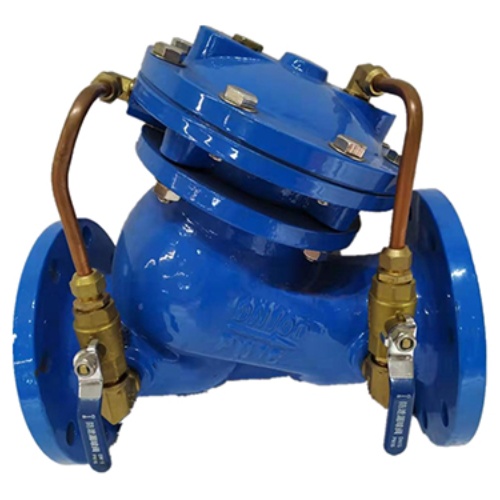
Water Pressure Control Valve for Efficient System Regulation and Flow Management
Understanding Water Pressure Reduction Valves A Comprehensive Guide Water pressure reduction valves
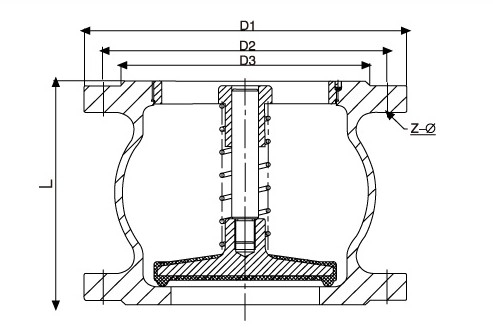
Válvula de retención de 12 mm para aplicaciones industriales y de fontanería eficientes
Válvula de Retención de 12 mm Importancia y Aplicaciones Las válvulas de retención son dispositivos
Wholesale Solutions for Valve Supply and Distribution in Various Industries
Understanding Valve Wholesale A Comprehensive Overview In the industrial world, valves play a crucia
 English